

The Cleveland Cavaliers were eight minutes away from stealing Game 1 of the Eastern Conference Finals when everything unraveled. A 22-point lead disappeared, Jalen Brunson took over, and the New York Knicks escaped with a 115-104 overtime victory.
Three losses later, Cleveland's most promising postseason run since LeBron James left ended in a humiliating sweep. It's another chapter in the LeBron James story Cleveland can't escape.
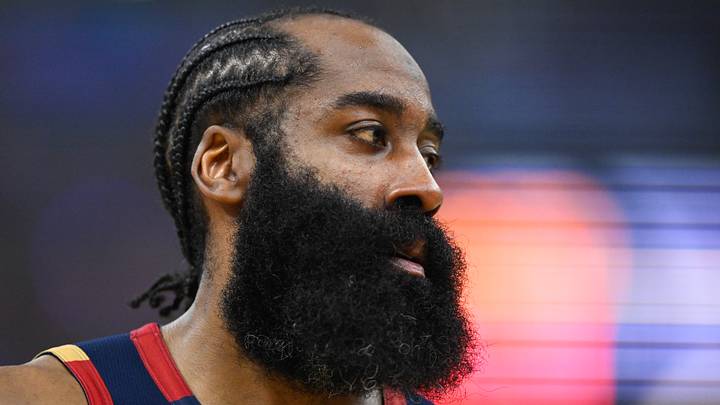
James Harden was an easy target, as usual, and that’s not to say it wasn’t warranted. His shooting was dreadful, his turnovers were costly, and his defense gave New York a matchup to exploit. But blaming Harden for Cleveland's collapse misses a much more uncomfortable truth.
The Cavaliers weren't beaten by one struggling player. Their biggest problem was an inability to adapt when their strengths became weaknesses, and no amount of star power could hide it.
Kenny Atkinson couldn't stop the bleeding
Harden averaged just 16 points against New York, shooting 38.9 percent from the field and 17.9 percent from three. His 17 turnovers only strengthened the argument that he failed when Cleveland needed him most.
But where was Kenny Atkinson when Brunson repeatedly hunted Harden during that Game 1 comeback?
New York erased Cleveland's advantage with a devastating 44-11 run through the closing minutes and overtime. Atkinson couldn't find an effective defensive adjustment, and the Cavaliers' offense completely unraveled.
Donovan Mitchell deserves scrutiny, too. He averaged 27.3 points but managed just 2.3 assists per game while committing 14 turnovers across the series. For Cleveland's leading scorer and primary offensive creator, those numbers exposed another problem when the offense came under pressure.
It's another reminder that Mitchell needs to improve in key areas if Cleveland expects to take the next step. Harden wasn't the only veteran guard making questionable decisions. And what about Cleveland's supposed advantage in the paint?
Evan Mobley averaged 17 points and 8.3 rebounds, and Cleveland largely held its own on the glass through the first three games. But in the closeout game, the Knicks dominated the rebounding battle 60-33.
For a team featuring Mobley and Jarrett Allen, getting outrebounded by 27 in an elimination game is difficult to defend.
Cleveland's roster problems were hiding in plain sight
The Cavaliers built their offense around two ball-dominant guards while relying on Mobley and Allen to protect the paint.
That arrangement worked well enough to reach the conference finals. Against New York, however, its limitations became painfully apparent.
When Brunson attacked Harden, Cleveland's big men were forced into difficult defensive rotations. When Mitchell and Harden struggled to create offense, the Cavaliers lacked reliable alternatives.
And when Mobley and Allen shared the floor, Cleveland sometimes sacrificed spacing without receiving the overwhelming rebounding advantage that should justify playing two traditional big men. That's why Evan Mobley's development has become increasingly important to the Cavaliers' championship aspirations.
The Cavaliers also shot just 32 percent on wide-open threes against New York. Fatigue and chemistry certainly mattered. Cleveland had survived consecutive seven-game series, and its core four had played only 25 games together following Harden's arrival.
But those circumstances don't erase the underlying roster concerns.
Koby Altman fixed one weakness while gambling on the others
Cleveland's acquisition of Peyton Watson was a meaningful response to its perimeter problems.
At 6-foot-8, Watson offers the length and defensive versatility the Cavaliers lacked against New York. Instead of asking smaller guards to survive difficult assignments, Atkinson can deploy a legitimate wing defender against opposing scorers.
Watson also averaged 14.6 points and shot 41.1 percent from three last season, suggesting he could contribute offensively without dominating the ball.
That's exactly the type of complementary player Cleveland needed.
But the Cavaliers surrendered Max Strus and Dennis Schröder to make the deal, sacrificing established shooting and ball-handling depth to address their defensive shortcomings.
Mario Hezonja offers additional size and offensive versatility, while rookie Meleek Thomas brings scoring potential. Neither is a guaranteed answer when Cleveland's stars struggle against playoff defenses.
Meanwhile, Khalifa Diop adds frontcourt depth without resolving the central question surrounding Mobley and Allen. Can Cleveland consistently play both big men without compromising its spacing and offensive flexibility?
Altman also retained Harden and extended Mitchell, effectively betting that greater continuity and a more versatile supporting cast will produce different results.
That's a defensible gamble, but it's still a gamble.
Cleveland can't afford another postseason blame game
Harden and Mitchell will have had a full training camp together, and Peyton Watson should give Atkinson more defensive flexibility.
But Cleveland's biggest problem remains its inability to adjust when opponents take away what it does best. Whether it's finding another way to generate offense, protecting a vulnerable defender or making the Mobley-Allen pairing work, the Cavaliers need answers that don't depend entirely on their stars.
Harden deserved criticism for his postseason performance. But Atkinson, Mitchell, Mobley, Allen and Altman all have a role in correcting what went wrong.
If the Cavaliers want to go any further, they'll need to prove they've learned why they couldn't win a single game once they got there.
 Add us as a preferred source on Google