

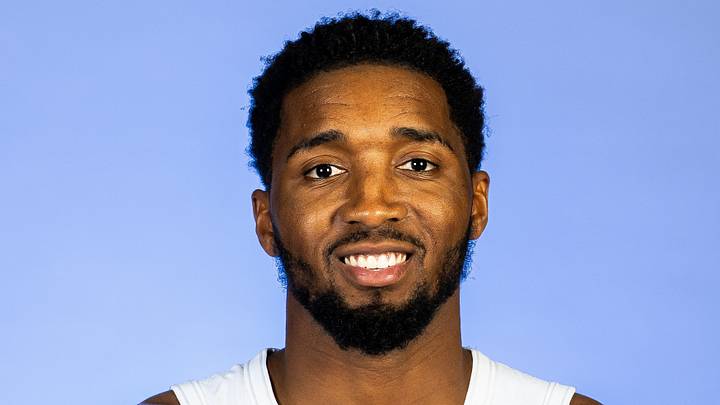
When the Cleveland Cavaliers need a basket with the game on the line, most fans probably expect the ball to end up in Donovan Mitchell's hands.
And why wouldn't they?
Mitchell is Cleveland's most explosive scorer, its offensive centerpiece and the player opponents spend entire games trying to contain. James Harden was supposed to make that responsibility easier, not necessarily take it away. But Cleveland's 2026 playoff clutch numbers raise an uncomfortable question. What if Mitchell isn't always the player who should be making the most important offensive decisions?
James Harden's clutch numbers tell a surprising story
The numbers aren't particularly flattering for either guard. But they're certainly interesting. Across eight qualifying playoff games, Mitchell scored 15 clutch points while shooting just 5-for-23 from the field. That's 21.7 percent.
Harden, meanwhile, scored 17 points on 6-for-17 shooting, good for 35.3 percent. In other words, Harden scored more points while attempting six fewer shots. And here's where things get even more interesting. Harden recorded five assists during those clutch situations. Mitchell finished with two.
Neither player was particularly efficient. Combined, they shot 11-for-40, or 27.5 percent, when Cleveland needed baskets most.
Those figures don't establish Harden as the superior closer. Eight qualifying games represent a limited sample, and clutch statistics don't tell us who initiated every possession or how difficult each attempt was. But they do challenge an assumption that rarely receives much scrutiny.
If Mitchell is automatically considered Cleveland's best late-game option, why did Harden produce more points and assists on fewer attempts? That's not an indictment of Mitchell. It's a question worth answering.
The Cavaliers might be asking the wrong player to control the offense
There's a difference between being your team's best scorer and being the player best equipped to organize its offense. Mitchell is exceptional at creating his own shot. Unfortunately, opposing defenses know that, too. When a close game reaches its final possessions, defenders can load up on Mitchell, anticipate his preferred actions and force him into increasingly difficult attempts.
Harden offers Cleveland another possibility.
Even at 37, he possesses the passing instincts, pick-and-roll experience and court vision to manipulate defenses without necessarily being the player who finishes the possession. His five playoff clutch assists offer at least some reason to explore that distinction.
Imagine Harden initiating an action while Mitchell moves off the ball. If defenders focus on Mitchell, Harden can attack the opening. If they pressure Harden, Mitchell becomes a dangerous scoring option against a rotating defense.
Meanwhile, Evan Mobley and Jarrett Allen can provide interior targets, with perimeter shooters positioned to punish collapsing defenders. The possibilities become considerably more interesting when neither guard is required to do everything.
And Cleveland shouldn't overlook Mobley, either. He attempted 17 clutch field goals during the playoffs, matching Harden's total, but converted just 23.5 percent. That suggests the Cavaliers need to improve the quality of opportunities throughout their offense, not simply redistribute difficult shots.
Giving Harden more responsibility doesn't mean Mitchell stops taking the biggest shots. It means those shots might become easier.
Cleveland has an opportunity to rethink its late-game identity
Kenny Atkinson doesn't need to announce a new closer. He needs to make the question of who's closing considerably harder for opponents to answer. Some possessions should begin with Harden orchestrating the offense and Mitchell operating as the preferred scorer.
Others should feature Mitchell initiating the action, particularly when a favorable matchup gives him an opportunity to attack. And sometimes the smartest decision might be letting the defense dictate which player takes control.
That's the advantage of having two accomplished offensive creators. Of course, Harden's clutch statistics don't guarantee he'd produce better results with additional responsibility. His own shooting numbers leave plenty of room for improvement. But Cleveland shouldn't mistake a familiar offensive hierarchy for an optimal one.
As the Cavaliers continue searching for ways to get more from Donovan Mitchell, they should consider whether asking him to do less initiating could actually make him more dangerous. Mitchell's reputation as Cleveland's closer is well established.
Harden's postseason production, however, suggests the conversation isn't quite as settled as fans might believe. And if the Cavaliers can make their two stars genuinely unpredictable in the final minutes, they might discover an advantage that matters far more in May than deciding whose name belongs beside the word closer.
 Add us as a preferred source on Google