

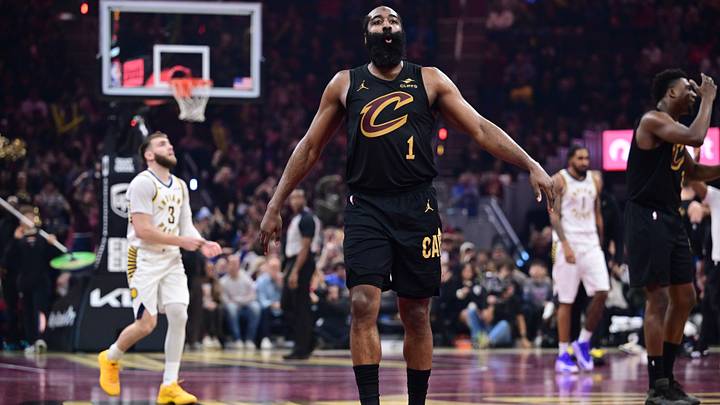
The Cleveland Cavaliers are moving at a pretty impressive clip this season. Unfortunately, their offense hasn't received the memo that moving faster is supposed to make scoring easier. Cleveland has embraced a quicker tempo, but the results suggest the Cavaliers are doing an awful lot of running without getting nearly enough out of it.
Through their first 17 games, the Cavaliers rank eighth in the NBA in pace. That's a noticeable jump from last season, when they finished 14th. Ordinarily, that would be encouraging for a team with Donovan Mitchell, James Harden and several athletic young players capable of creating problems in the open floor.
There's just one rather inconvenient detail. Cleveland ranks only 18th in fast-break points, averaging 13.4 per game. Apparently, getting down the court quickly and actually accomplishing something once you arrive are two very different skills.
Cleveland's transition efficiency isn't keeping up with its pace
The numbers become even less flattering when examining how the Cavaliers perform on transition possessions. Cleveland averages approximately 19.1 transition possessions per game, accounting for 16.8 percent of its offensive plays. Those possessions generate roughly 1.11 points apiece, placing the team around the middle of the league in transition efficiency. For a roster with this much offensive talent, that's a bit weird.
Mitchell is an explosive scorer who can attack retreating defenders. Peyton Watson brings athleticism and finishing ability, while Meleek Thomas has shown the confidence to capitalize on opportunities before opposing defenses get organized. Cleveland certainly isn't lacking players who can run.
What it's missing is the consistency required to turn those opportunities into something meaningful. A transition possession shouldn't routinely become another contested jumper or an opportunity for the defense to get comfortable. The entire point of pushing the pace is to force opponents into uncomfortable decisions before they have time to establish their coverage. Instead, the Cavaliers are producing a lot of movement without the corresponding advantage.
Kenny Atkinson needs more than a faster offense
There's a temptation to treat pace as an achievement in itself, especially when a team is trying to modernize its offense. Faster possessions look exciting, and they can create the impression that everyone is playing with greater urgency. However, pace measures how quickly possessions unfold. It doesn't measure how intelligently they're executed.
The Cavaliers have already demonstrated that they possess players capable of making a difference in the open court. Watson's early-season contributions, including his aggressive transition attacks, offered a glimpse of what Cleveland's athleticism can accomplish when used effectively. His early impact on the Cavaliers was encouraging precisely because he wasn't simply running for the sake of running.
That distinction is important for Kenny Atkinson. Cleveland needs players filling lanes with purpose, making earlier decisions and recognizing when a genuine scoring advantage exists. Otherwise, pushing the tempo merely accelerates the arrival of another ordinary possession.
The Cavaliers also need to capitalize on defensive mistakes more consistently. Their relatively modest fast-break production suggests that their current approach isn't generating the easy points that should help relieve pressure on Mitchell and Harden.
The Cavaliers need to make their speed count
None of this means Cleveland should abandon its faster approach. The roster has enough athleticism and offensive firepower to make transition basketball a legitimate weapon, particularly when its younger players are involved.
The problem is that speed alone doesn't make an offense dangerous. If anything, moving quickly without a clear plan can make a team easier to anticipate because opponents know the possession will develop before the Cavaliers have created a meaningful advantage.
Cleveland is already one of the league's more productive scoring teams, which makes its transition shortcomings especially frustrating. Imagine how much more dangerous the Cavaliers could become if their fast-break execution actually matched their willingness to run.
For now, the Cavaliers are proving that playing faster and playing better aren't necessarily the same thing. They've figured out how to increase the tempo. The next challenge is making sure all that running is worth the effort.
 Add us as a preferred source on Google