

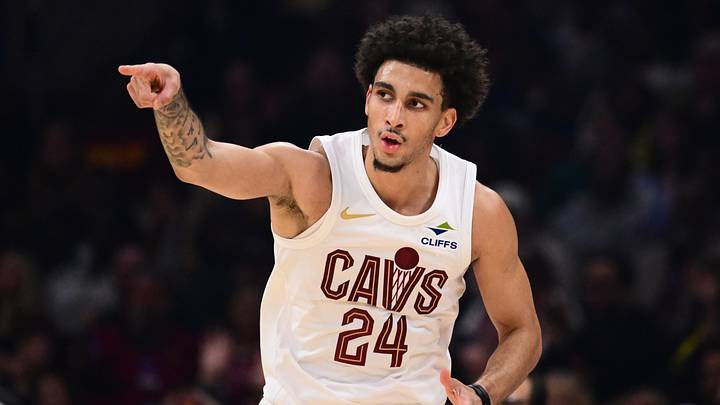
The Cleveland Cavaliers have an increasingly interesting collection of young guards, which sounds like great news until someone starts losing their place in the rotation. For Craig Porter Jr., that reality could arrive sooner than expected.
Porter once looked like one of Cleveland's more promising developmental discoveries, bringing defensive energy, athleticism and playmaking to a team that needed affordable contributors. But the Cavaliers have since added younger players who are making stronger cases for consistent minutes, and Porter suddenly finds himself competing for opportunities that used to look considerably more accessible.
Tyrese Proctor and Meleek Thomas are giving Cleveland reasons to invest in its future backcourt, while Porter is averaging just 2.1 points through 11 appearances. The difference in production doesn't tell the entire story, but it raises a legitimate question about whether Porter has a meaningful long-term role on this roster.
Tyrese Proctor's emergence is creating a problem for Craig Porter Jr.
Proctor has become one of Cleveland's most encouraging early-season developments, averaging 9.3 points and 2.8 assists while shooting 53 percent from the field through 13 games. His 24-point, 11-rebound, 10-assist performance against Dallas offered another example of why the Cavaliers should continue investing in his development.
For Porter, the problem isn't simply that Proctor is producing more. It's that the younger guard is demonstrating skills Cleveland needs from its supporting cast, including perimeter shooting, secondary playmaking and the ability to operate without dominating the ball.
Thomas has complicated the situation further by averaging 13.6 points through his first 11 appearances. His scoring gives Atkinson another option in a backcourt already featuring Donovan Mitchell, James Harden and Sam Merrill.
That leaves Porter competing for a shrinking number of opportunities, especially when the Cavaliers have their full complement of players available. Cleveland can appreciate his defensive effort and versatility without pretending there will always be enough minutes to accommodate everyone.
The Dallas victory demonstrated that Porter can still contribute when given an opportunity. He finished with nine points, nine rebounds and six assists in more than 28 minutes, showing the kind of all-around activity that initially made him an intriguing prospect.
But one productive performance doesn't erase the larger question. If Cleveland's younger guards continue developing, Porter may need to establish a more specialized role rather than expect the same opportunities he once received.
Cleveland may have outgrown Craig Porter Jr.'s original role
Porter's situation illustrates how quickly an NBA roster can change. A player can be a worthwhile developmental investment one season and find himself squeezed out of the rotation the next, even without doing anything particularly wrong.
The Cavaliers are trying to win a championship while developing contributors who can eventually assume greater responsibilities. That combination creates difficult decisions, particularly when established stars already occupy most of the available backcourt minutes.
Porter remains useful because of his defensive activity, rebounding from the guard position and willingness to make plays without requiring a featured offensive role. Those qualities shouldn't be dismissed simply because Proctor and Thomas have generated more attention.
However, Cleveland also has to consider whether keeping Porter in a limited role makes sense if another organization could offer him a clearer opportunity. Depending on his contract and market value, he could eventually become part of a smaller trade or roster adjustment designed to address a more pressing need.
That doesn't mean the Cavaliers should rush to move him. Injuries can change a rotation overnight, and Porter's ability to handle multiple responsibilities provides useful insurance during a long season.
But the front office shouldn't confuse having depth with having a realistic development plan for every player. Proctor and Thomas are beginning to establish themselves as meaningful pieces of Cleveland's future, and Porter needs to demonstrate why he deserves a place alongside them.
The Cavaliers may have discovered more young backcourt talent than they expected. Unfortunately for Porter, that success could make him one of the first players forced to prove he should still have a seat at the table.
 Add us as a preferred source on Google