

The Cleveland Cavaliers had an expensive week.
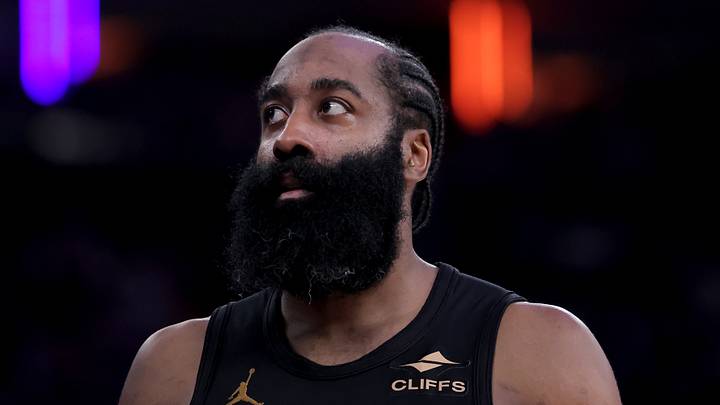
They paid millions in cash for the Charlotte Hornets to take on the contract of Dennis Schroder. They signed young wing Peyton Watson to a four-year, $88 million contract. The following day, they handed former MVP James Harden an even bigger three-year, $97 million fully-guaranteed contract.
While both the Watson and Harden deals are indicative of a team spending money to try and win basketball games, the contracts themselves are actually polar opposites and are in dissonance with one another.
One deal raises the Cavaliers' ultimate ceiling, and the other puts a cap on it.
Peyton Watson has upside
The 23-year-old Watson entered the league as a raw prospect out of UCLA in the 2022 NBA Draft, a player with elite athleticism and length but who needed to put it all together. He was far from a polished player when he joined the Denver Nuggets.
His growth has taken time. He barely played as a rookie, and was a low-minute rotation player in his second season. His athleticism popped immediately, but he had a lot of refinement to do on his game, on both ends of the court. How to defend on the perimeter without fouling. How to move in open space to be wide open when Nikola Jokic slung him the ball. The NBA takes time to learn.
This past season, Watson took another step forward. When Jokic missed a month of action, Watson came alive. He went from athletic 3-and-D wing to something more. He was creating his own offense, shooting like he was Kevin Durant, and he helped to carry Denver through a stretch that should have doomed them.
Still only 23 years old, Watson is still brimming with upside. Perhaps that hot stretch last seasonw as a fluke, but he still has plenty of room to grow. Locking up a player who at worst is a much-needed athletic 3-and-D wing, and at best is a budding two-way star, to a deal at just $22 million per season? That's the kind of move that unlocks the upside of this team.
It's the polar opposite of the James Harden deal.
James Harden caps their upside
Re-signing Harden was always going to happen after the Cavaliers traded away All-Star point guard Darius Garland for the veteran ball-handler. Harden will turn 37 years old this week. He has played over 42,000 regular season minutes and another 6,900 in the playoffs. By comparison, Watson has played only 5,2000 combined regular season and playoff minutes.
Harden is a known commodity. There is no hidden upside waiting in his game. He is the model of consistency, pounding the rock and making pinpoint passes and confidently hitting stepback jumpers. The Cavaliers know what they are getting in Harden, and it raises their regular season floor.
It also lowers their playoff ceiling. Harden's game is less effective in the postseason; it always has been. Defenses are tighter and faster, game plans are locked in, and Harden's style opens up fewer opportunities. When he does shoot, he tends to miss more often -- but he often cannot or chooses not to get up as many shots.
The Cavaliers are funding another expensive team because they want to win a championship. Signing Peyton Watson is the kind of high-upside move you make to pursue that goal. Signing Harden to a lucrative three-year deal is the kind of low-upside move that pushes that goal even further out of reach.
They reached for the stars by signing Watson. They anchored themselves to the ground by signing Harden. And the result is likely to be another really good, and ultimately not good enough, season in Cleveland.
 Add us as a preferred source on Google