

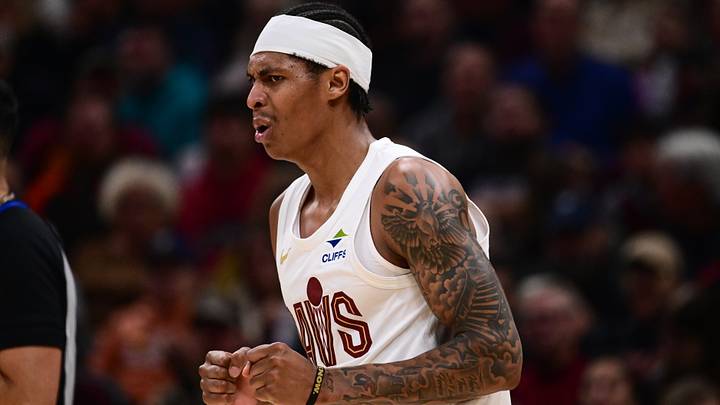
The Cleveland Cavaliers have spent years collecting talent, but apparently nobody stopped to check whether all those players actually fit together. With an 8-7 record through their first 15 games, Cleveland looks like a team with plenty of recognizable names and considerably fewer answers about how everyone should contribute.
The problem isn't necessarily a lack of quality players. Donovan Mitchell, James Harden, Evan Mobley and Jarrett Allen form an expensive foundation, while Tyrese Proctor, Meleek Thomas, Jaylon Tyson and Peyton Watson provide additional options throughout the rotation.
But having multiple players capable of doing similar things doesn't automatically make a roster more versatile. In Cleveland's case, it may be creating unnecessary competition for the same responsibilities while leaving other weaknesses unresolved.
Koby Altman has assembled a roster with considerable individual talent, but the Cavaliers still need to prove those pieces make sense together.
Cleveland's crowded backcourt is creating more questions than answers
Mitchell and Harden are established offensive creators who are most effective when they're allowed to control possessions and make decisions with the ball. Their partnership can generate opportunities for teammates, but it also requires both players to adjust to sharing responsibilities that have traditionally defined their games.
Behind them, Proctor and Thomas are developing into promising contributors who need meaningful opportunities to expand their offensive skills. Craig Porter Jr. provides additional ball-handling and defensive activity, while Sam Merrill offers perimeter shooting.
Those are useful players, but Cleveland doesn't have unlimited minutes or possessions to distribute. Atkinson must decide how to develop younger guards without undermining the established offensive hierarchy, and that becomes more complicated when the team is struggling to win consistently.
Proctor's recent triple-double against Dallas demonstrated what he can accomplish with greater responsibility, while Thomas has averaged 13.3 points through his first 12 games. Their emergence is encouraging, but it also makes Cleveland's reliance on a veteran-heavy backcourt worth questioning.
The Cavaliers don't need to abandon their established stars to develop those players. They do, however, need clearer offensive roles so their younger contributors aren't reduced to waiting for injuries before receiving meaningful opportunities.
Otherwise, Cleveland risks spending another season discovering talented players without figuring out how to use them together.
Cavaliers' frontcourt investment hasn't eliminated their biggest weaknesses
Cleveland's frontcourt presents a different version of the same problem. Mobley and Allen are both talented interior defenders and efficient finishers, but their partnership doesn't always provide the offensive spacing or physical advantage the Cavaliers need against elite opponents.
That was evident during last season's Eastern Conference Finals, when the New York Knicks controlled the rebounding battle despite Cleveland's investment in two established big men.
The Cavaliers also have Thomas Bryant, Khalifa Diop and other developmental frontcourt options competing for opportunities. Bryant offers a different offensive profile because he can stretch the floor, while younger players such as Norchad Omier bring physicality and rebounding potential.
None of those players is automatically better than Allen or Mobley, but their presence raises questions about how Cleveland should distribute its resources. If the Cavaliers already have several players capable of contributing near the basket, continuing to devote so much money to a traditional frontcourt pairing deserves scrutiny.
The issue isn't simply having too many big men. It's whether Cleveland has invested heavily in overlapping strengths without adequately addressing the weaknesses that opponents repeatedly exploit.
Koby Altman needs to prioritize roster balance over collecting talent
The Cavaliers' wing rotation offers another example of how individual ability doesn't always translate into a coherent roster. Watson provides defensive versatility, Tyson brings scoring potential, and Mario Hezonja offers additional offense, but Cleveland still has to determine which combinations provide the best balance against stronger competition.
Watson's early shooting struggles illustrate the challenge. He's averaging 10.7 points while shooting 37.5 percent from the field and 23.1 percent from three-point range through 12 games. His defense remains valuable, but opponents have less reason to respect Cleveland's spacing when one of its primary perimeter options struggles to convert open looks.
That's where Altman's roster-building decisions deserve closer examination. Cleveland doesn't necessarily need another expensive star or a dramatic overhaul, but it does need players whose strengths complement one another rather than creating additional competition for the same roles.
The Cavaliers could benefit from a more deliberate approach to balancing shooting, perimeter defense, rebounding and secondary playmaking. That might require difficult rotation decisions, smaller trades or eventually moving a talented player whose skill set overlaps too heavily with someone else already on the roster.
Cleveland has enough individual talent to produce impressive regular-season performances, but the team's championship ambitions demand something more cohesive. The Cavaliers cannot keep assuming that adding another productive player automatically makes the collective better.
Altman has spent years assembling an expensive roster designed to compete for a title. Now he needs to prove he can build a team rather than simply collect players who look good on paper. Because Cleveland's roster doesn't need another name to brag about. It needs a lineup that actually works.
 Add us as a preferred source on Google