

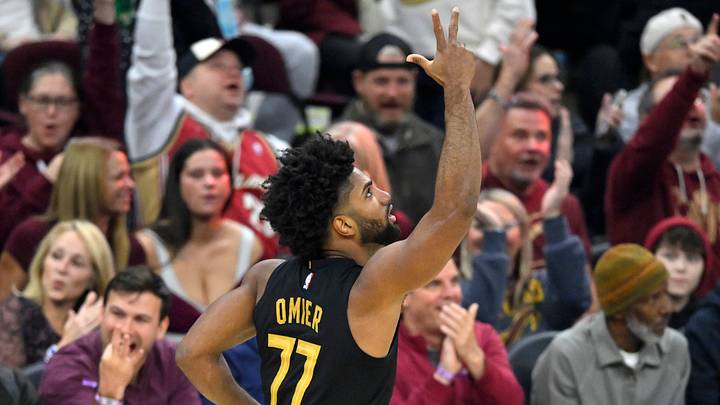
The Cleveland Cavaliers have invested millions in their frontcourt, yet rebounding and physicality continue to become talking points whenever the team struggles against tougher opponents. Apparently, spending big money on size doesn't automatically guarantee that Cleveland will control the paint.
That's what makes Norchad Omier such an interesting name to watch. The 25-year-old forward wasn't supposed to become a major storyline when Cleveland signed him earlier this month, but his recent performance suggests the Cavaliers might have found something useful in a player most fans weren't expecting to hear much about.
Omier isn't going to replace Evan Mobley or Jarrett Allen, and nobody should be handing him a permanent rotation spot after one encouraging outing. However, his physicality and rebounding instincts could give Kenny Atkinson a different option when Cleveland needs someone willing to fight for every possession.
Norchad Omier's performance against Dallas deserves more attention
Cleveland's 127-117 victory over the Dallas Mavericks provided an opportunity for several overlooked players to demonstrate what they could contribute. With the usual starters unavailable, the Cavaliers relied on their supporting cast to produce one of the season's more entertaining performances.
Omier finished with 13 points, eight rebounds, two assists and a steal in approximately 27 minutes, making all five of his field-goal attempts. He also grabbed two offensive rebounds, helping Cleveland maintain pressure around the basket while its makeshift lineup handled the Mavericks.
The performance was particularly interesting because Omier doesn't fit the traditional NBA big-man profile. At 6-foot-5, he's undersized for someone who does much of his work near the basket, but his strength and willingness to compete physically help compensate for what he lacks in height.
Cleveland doesn't necessarily need another towering center to address every rebounding issue. Sometimes, the more useful addition is someone who consistently establishes position, pursues loose balls and refuses to let opponents collect easy second-chance opportunities.
Omier has a long way to go before proving he can provide those contributions against elite competition, but his performance against Dallas gives Atkinson a legitimate reason to keep evaluating him.
Cleveland's expensive frontcourt shouldn't make Omier an afterthought
The Cavaliers have built their identity around Mobley and Allen, two talented big men who provide rim protection, efficient finishing and substantial rebounding production. Both are important to Cleveland's success, but their presence hasn't eliminated the team's occasional struggles against physical opponents.
Last season's Eastern Conference Finals offered a particularly frustrating example. The New York Knicks repeatedly controlled the rebounding battle despite Cleveland having two established interior players, exposing how quickly a perceived frontcourt advantage can disappear during a playoff series.
Omier isn't the solution to everything that went wrong against New York, and expecting him to solve problems that established veterans couldn't would be ridiculous. But his willingness to battle inside could provide something useful in smaller lineups, particularly when Cleveland needs energy rather than another player demanding offensive touches.
There are obvious limitations to consider. His size could create defensive mismatches against taller centers, and one efficient scoring performance doesn't establish him as a dependable offensive contributor. Atkinson would need to experiment carefully rather than assume the Dallas game represents Omier's normal production.
Still, Cleveland has little reason to ignore a potentially useful contributor simply because he arrived without the reputation or contract of its established players. If Omier can consistently rebound, defend his position and finish around the basket, he could become a valuable low-cost option.
The Cavaliers have spent years searching for ways to make their frontcourt more effective when the competition gets serious. Omier might not become the answer, but he's earned the opportunity to show whether Cleveland already has another piece of the solution sitting on its bench.
 Add us as a preferred source on Google