

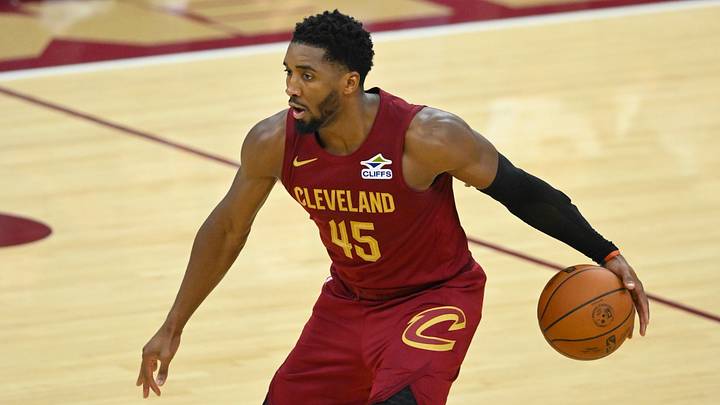
Apparently, easy baskets are optional in Cleveland. The Cavaliers spent Thursday night grinding through difficult possessions against the Atlanta Hawks while their opponents enjoyed the luxury of scoring before the defense could get organized.
Cleveland managed a whopping four fast-break points in its 114-111 loss, compared with Atlanta's 15. That's an 11-point difference in a game decided by three, which makes the Cavaliers' lack of transition production especially frustrating. Nobody is suggesting those missing points automatically cost Cleveland the game, but that kind of disparity deserves some serious side-eye.
With Donovan Mitchell's explosiveness, Evan Mobley's mobility and Peyton Watson's athleticism, Cleveland has enough players to make opponents miserable in the open floor.
James Harden doesn't need to win a footrace to contribute, either, considering his ability to deliver passes that put teammates in scoring position. Yet the Cavaliers spent far too much time asking their stars to manufacture difficult baskets while Atlanta demonstrated the value of taking the easier route.
Cleveland is making scoring harder than it needs to be
Mitchell and Harden are two of the NBA's most accomplished offensive creators, but having players who can manufacture difficult shots doesn't mean Cleveland should make that its entire personality.
Against Atlanta, the Cavaliers shot 43.7 percent from the field and converted just 13 of their 42 three-point attempts. Harden finished with 24 points and Mitchell added 22, but Cleveland's offense struggled to produce consistently enough to protect an early advantage.
The most frustrating stretch came in the second quarter, when the Cavaliers scored just 16 points after building a 15-point lead. Atlanta responded with a 19-2 run, turning Cleveland's comfortable advantage into another exhausting fight for control.
Those are precisely the moments when transition scoring can help. Instead of relying on Mitchell to navigate multiple defenders or Harden to spend half the shot clock creating an opening, a quick outlet pass and an aggressive finish can provide points before the defense has time to prepare.
The Cavaliers have too much athleticism to ignore the open floor
Mobley moves exceptionally well for a player his size, Mitchell can punish defenders who haven't recovered, and Watson has the athleticism to turn an ordinary possession into an easy finish.
Cleveland isn't lacking players capable of running the floor. The more pressing concern is whether the Cavaliers are recognizing opportunities quickly enough to take advantage of them.
Harden can contribute without attempting to become the NBA's oldest track star. His passing ability allows him to advance the ball and find teammates in favorable positions, particularly when opposing defenders are still recovering from the previous possession.
Atkinson should examine how quickly Cleveland advances the ball following defensive rebounds, whether its wings are filling running lanes and whether its guards are recognizing opportunities before opponents get organized. The Cavaliers don't need to abandon their half-court offense, but they shouldn't treat every possession like a complicated math problem when a simpler solution might be available.
Hawks found the easy money while Cavs worked overtime
The Hawks generated 15 fast-break points, giving themselves another source of offense while Cleveland struggled through stretches of inefficient shooting.
That advantage didn't single-handedly determine the outcome, but it contributed to a frustrating offensive imbalance. Cleveland repeatedly needed its primary creators to generate opportunities against an organized defense, while Atlanta collected points through a more varied attack.
The Cavaliers' limited transition production also raises questions about their defensive execution. Securing rebounds and forcing turnovers can create opportunities to attack before opponents recover, meaning Cleveland's defensive shortcomings could be limiting its offense as well.
If the Cavaliers aren't generating enough transition chances, Atkinson needs to examine why. If those opportunities exist and Cleveland simply isn't capitalizing on them, the coaching staff has an entirely different problem to solve. Either explanation deserves attention after such a narrow loss.
Kenny Atkinson needs to stop letting easy points go unclaimed
Nobody expects Cleveland to transform into a run-and-gun offense overnight, especially with Harden directing so much of the action. The Cavaliers have legitimate reasons to value their half-court execution, and Mitchell remains one of the league's most dangerous players when defenses are already set.
However, Cleveland's offensive approach should leave room for quicker decisions when opportunities present themselves. Mobley and Watson can provide athleticism in transition, Mitchell can attack unsettled defenses, and Harden can create advantages with his passing rather than relying exclusively on deliberate possessions.
Four fast-break points in a three-point loss isn't enough evidence to declare a season-long crisis, but it's certainly a performance worth examining before the Cavaliers face stronger defensive opponents.
Cleveland has enough offensive firepower to make life miserable for opposing teams. Watching that talent work overtime for difficult baskets while easier opportunities go unexplored is like paying full price for something that's sitting in the clearance aisle.
Atkinson needs to find out whether those opportunities are being missed or simply aren't being created, because the Cavaliers can't afford to keep making scoring more difficult than necessary.
 Add us as a preferred source on Google