

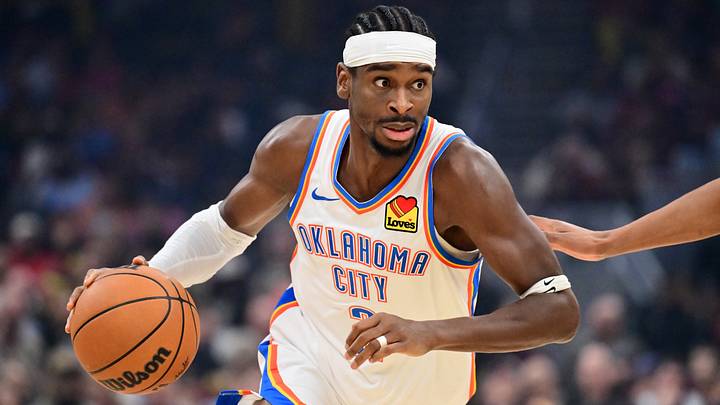
The Cleveland Cavaliers had no business letting an undermanned Oklahoma City Thunder team walk into Rocket Arena and steal a victory Monday night. After spending much of the evening fighting uphill, Cleveland finally put itself in position to win, only to squander nearly every opportunity that came its way. The 117-112 loss was especially frustrating because Oklahoma City was missing several important contributors, and the Cavaliers had more than enough chances to take advantage.
Cleveland's problems went well beyond a few missed shots. The Cavaliers wasted free throws, failed to capitalize on defensive stops and made questionable decisions when the game was within reach. Oklahoma City certainly deserves credit for finding ways to win, but Cleveland made the Thunder's job considerably easier by repeatedly failing to finish possessions that could have changed the outcome.
Cleveland's late-game execution was an absolute disaster
Despite trailing by as many as 14 points, Cleveland battled back and grabbed a 108-105 lead with 3:21 remaining following an Evan Mobley layup. Kenny Atkinson immediately complicated matters by picking up a technical foul while protesting the officiating. Shai Gilgeous-Alexander converted the free throw before knocking down a jumper on Oklahoma City's next possession to tie the game, effectively erasing Cleveland's three-point advantage in a matter of seconds.
Atkinson's frustration might have been understandable, but giving away a point in such a close game was an unnecessary mistake. Cleveland had worked too hard to reclaim the lead, and its coach handed Oklahoma City an opportunity to regain momentum without having to earn it through normal gameplay. That decision became even more frustrating as the Cavaliers continued struggling to execute down the stretch.
Gilgeous-Alexander finished with 43 points but needed 35 field-goal attempts to get there, shooting just 14-of-35. His inefficiency created opportunities for Cleveland to capitalize, yet the Cavaliers couldn't take advantage. Donovan Mitchell missed a jumper with 2:21 remaining, while Meleek Thomas missed a layup with 1:37 left. Oklahoma City responded with baskets from Isaiah Hartenstein and Ajay Mitchell, although Sam Merrill eventually gave Cleveland another chance by tying the game at 112 with just over a minute remaining.
Even then, the Cavaliers couldn't finish the job. After another Gilgeous-Alexander miss, Oklahoma City retained possession, and the Thunder star eventually connected on the go-ahead three-pointer with 32.6 seconds remaining. Cleveland had multiple opportunities to build a cushion or regain control, but its inability to convert offensively and secure defensive possessions ultimately proved costly.
Donovan Mitchell and James Harden failed when Cleveland needed them most
For a team featuring two established offensive stars, Cleveland shouldn't have struggled this much to find someone capable of taking control late. Mitchell finished with 17 points on 6-of-17 shooting, while Harden contributed 14 points on 10 attempts. Mitchell's 11 assists were valuable, but the Cavaliers needed considerably more scoring from their backcourt, especially with rookie Meleek Thomas matching Mitchell's point total in his first NBA start.
Their struggles at the free-throw line were even more damaging. Mitchell converted just one of four attempts, while Harden went one of three, leaving Cleveland's two primary offensive weapons with a combined two makes on seven free throws. The Cavaliers finished 14-of-24 as a team, missing 10 free throws in a game decided by five points. Oklahoma City, meanwhile, converted 21 of its 23 attempts, demonstrating the kind of execution Cleveland desperately needed.
Mitchell and Harden don't have to dominate every possession for the Cavaliers to win, but their experience and offensive ability are supposed to provide an advantage in close games. Instead, Cleveland's stars struggled to score efficiently and failed to capitalize on opportunities that could have changed the outcome. Their missed free throws were especially difficult to excuse because those points required nothing more than converting uncontested attempts.
The Cavaliers have nobody to blame but themselves
Oklahoma City deserves credit for surviving without several important contributors, but the Thunder were far from unbeatable Monday night. Cleveland had home-court advantage, erased a significant deficit and held a fourth-quarter lead despite its own offensive struggles. Even Gilgeous-Alexander's 43-point performance came with enough missed shots to give the Cavaliers opportunities to regain control.
Instead, Cleveland surrendered an unnecessary technical free throw, missed 10 attempts at the line and failed to secure enough defensive rebounds when possessions mattered most. The Cavaliers also received disappointing scoring performances from Mitchell and Harden, leaving them without the offensive production they needed to overcome their mistakes.
Losing to a talented Oklahoma City team isn't inherently embarrassing, especially with Cleveland dealing with injuries of its own. However, allowing a depleted opponent to escape after repeatedly putting itself in position to win raises legitimate concerns about the Cavaliers' execution and late-game decision-making.
Cleveland didn't lose because Oklahoma City was impossible to beat. The Cavaliers lost because they repeatedly failed to capitalize when the game was there for the taking, turning a winnable matchup into another frustrating example of their inability to finish.
 Add us as a preferred source on Google