

You know, you really can't make this stuff up.
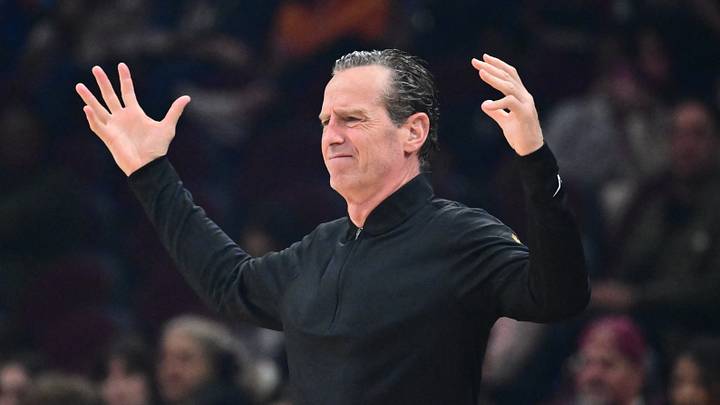
Kenny Atkinson apparently came away from Cleveland's narrow victory over Brooklyn with a much more reassuring impression than most Cavaliers fans.
"We're a calm group. We have overall really good emotional control as a group and keep pretty steady," Atkinson said following Saturday's 125-121 victory.
That's an interesting assessment considering Cleveland nearly surrendered a 22-point fourth-quarter lead just two days after blowing a 29-point advantage against Philadelphia. Atkinson may genuinely believe his players remained composed. However, their performance raises serious questions about whether that composure translated into anything meaningful.
Cleveland's fourth-quarter performance tells another story
The Cavaliers entered the fourth quarter comfortably ahead before allowing Brooklyn to score 41 points and reduce their advantage to two with 8.1 seconds remaining. Eight fourth-quarter turnovers helped transform what should have been a convincing victory into another desperate finish. Through two games, Cleveland has been outscored 73-45 in fourth quarters.
Those numbers hardly suggest a team operating with confidence and control. To be fair, emotional composure and effective execution aren't necessarily the same thing. Players can remain calm while making poor decisions.
However, when those mistakes repeatedly occur under pressure, praising composure feels disconnected from the problems unfolding on the court. Cleveland has now experienced two consecutive late-game breakdowns. The fact that Saturday ended with a victory shouldn't make the circumstances any less concerning.
Atkinson's optimism could undermine accountability
There are several reasonable explanations for Atkinson's comments. He may be protecting his players' confidence following a difficult opening week. Publicly criticizing a team after a victory isn't always the most productive leadership approach.
He may also genuinely believe Cleveland maintained its emotional discipline despite struggling with execution. Or he could be attempting to balance encouragement with criticism, particularly since he acknowledged that the Cavaliers need to improve their situational basketball and ability to close games.
That acknowledgment matters because Atkinson clearly recognizes that something needs correcting. However, there's a difference between supporting players and offering reassurance that risks minimizing recurring failures.
Cleveland surrendered a 22-point fourth-quarter lead against New York in Game 1 of last season's Eastern Conference Finals. The Knicks eventually swept the Cavaliers. Now, two games into another championship pursuit, Cleveland is displaying similar vulnerabilities.
Atkinson doesn't need to publicly embarrass his players to establish accountability. He does need to communicate that these breakdowns are unacceptable, especially when they repeatedly threaten games Cleveland should win.
Sometimes holding a team to a higher standard requires acknowledging uncomfortable realities rather than emphasizing reassuring interpretations.
The Cavaliers need a wake-up call, not reassurance
It's entirely possible Atkinson is addressing these problems more forcefully behind closed doors. His public comments don't necessarily reflect everything being communicated within the organization. But the disconnect between his assessment and Cleveland's performance is difficult to overlook.
The Cavaliers need better ball security, smarter decisions and more reliable execution when opponents increase defensive pressure. With several formidable opponents approaching, Cleveland cannot continue treating substantial leads as opportunities for unnecessary drama.
Atkinson can keep telling everyone his Cavaliers are composed. But until they start playing like it, fans have every reason to question what their coach is seeing.
 Add us as a preferred source on Google