

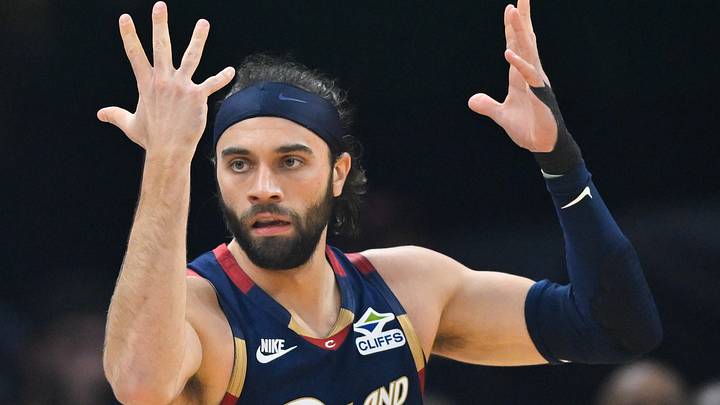
The Cleveland Cavaliers made a calculated bet when they traded Max Strus as part of the five-team deal that brought Peyton Watson to town. Watson offered the size, athleticism and defensive versatility Cleveland had been missing. Strus, meanwhile, was coming off an injury-disrupted season that made moving on easier to justify.
On paper, the logic was sound. Cleveland needed someone capable of handling the Eastern Conference's increasingly intimidating collection of wings, and Watson fit the description. The more interesting question is whether the Cavaliers underestimated everything Strus provided when he wasn't scoring.
Max Strus brought more than three-point shooting
Strus became a valuable part of Cleveland's identity because he understood how to play without dominating the basketball. He moved constantly, attacked openings and forced defenders to pay attention even when his shot wasn't falling.
That movement matters enormously alongside Donovan Mitchell and James Harden. Both guards thrive when the floor is spaced and defenders face difficult decisions. A teammate who keeps moving can create opportunities without ever appearing in the box score.
Strus also brought a willingness to shoot that opponents had to respect. His presence could stretch defensive coverage, giving Cleveland's stars more room to operate. The problem wasn't that Strus suddenly forgot how to play. Injuries limited him to 12 games last season, creating understandable questions about his availability and long-term value.
Cleveland chose to bet on a younger, more athletic alternative.
The Cavaliers may miss the things that don't appear in highlights
There's a temptation to evaluate trades by comparing individual statistics. If Watson scores more, defends better and stays healthier, the Cavaliers win the deal. That calculation overlooks how a player's habits influence everyone around him.
Strus could help an offense maintain its rhythm without demanding possessions. Watson might eventually provide similar benefits, but Cleveland shouldn't assume the adjustment will happen immediately.
The challenge becomes more pronounced in the postseason, when opponents study every tendency. If defenses ignore Watson on the perimeter or disrupt Cleveland's off-ball movement, the Cavaliers could find themselves missing Strus' familiar role. That doesn't mean the trade was a mistake. It means the organization accepted one kind of risk to address another.
Cleveland needs Watson to make the trade worthwhile
The Cavaliers didn't acquire Watson merely to replace Strus' production. They acquired him to change what their lineups can do against championship-caliber competition. That distinction should determine how the deal is judged.
If Watson provides reliable perimeter defense, finishes opportunities created by Harden and Mitchell, and holds up in the playoffs, Cleveland will have little reason to dwell on Strus. If the offense becomes predictable, however, the Cavaliers might discover that replacing a veteran's box-score numbers was considerably easier than replacing his influence.
Cleveland has already made its choice. Now Atkinson must make sure the team gains more than it gave away. For a franchise trying to get past the Eastern Conference Finals, that's the only trade grade that matters.
 Add us as a preferred source on Google